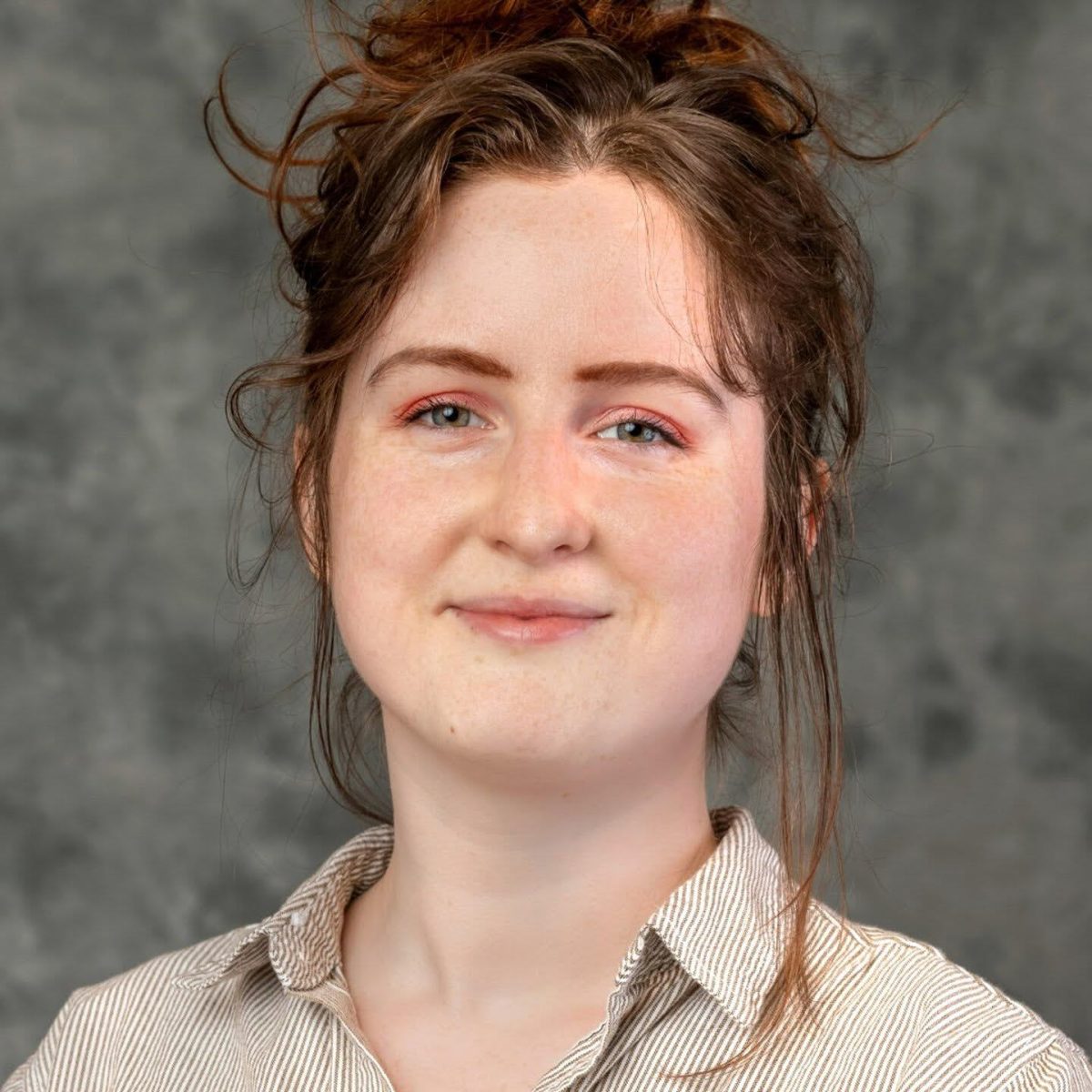
The Office of Sustainability has a new face in its midst: Madeline Yeatts, who started this month as the college’s new sustainability manager following the September departure of Kurt Hatcher, ’07, who had previously held the position since 2022.
Yeatts sees Allegheny’s culture of sustainability as an important avenue for students to find community and build bonds with one another, especially in an increasingly isolated world.
“I think sustainability is not just this narrowly environmental focus thing, but it’s a care for others, a care for the environment, a care for meeting each other’s basic needs,” Yeatts said in a Feb. 23 interview with The Campus. “I think those things are really important and something that students would really benefit from getting involved in, especially because I feel like it’s so hard to connect these days. Like, post-COVID, just the environment around connection has changed, and I feel like education and a love of learning and sustainability are ways to connect with people.”
Yeatts is enthusiastic about projects that revolve around supporting students’ work in sustainability efforts across campus.
“Right now, I’m working on helping to support the students who are leading the food rescue efforts and kind of reviving that,” Yeatts said. “I’m really excited about that and I think the students are doing a great job.”
Another current focus for Yeatts involves amplifying the Gator Success Closet, a free on-campus supply of gently used professional clothing available to all students.
“I’m working on kind of spreading the word about the Gator Success Closet, trying to get students connected with professional clothing, thinking about how that could be expanded to fulfilling other basic needs that students might have, doing some communications and social media outreach, stuff like that,” Yeatts said.
Green Coalition Co-President Liam Shields, ’27, said Yeatts has already become one of the organization’s main contacts and described her as taking a proactive approach to build connective relationships among student leaders through regular check-ins and speaking with student leaders to gather their insights. He hopes that Yeatts’ presence will help the Office of Sustainability dive deeper into its existing portfolio of priorities.
“I think having another person working there will be super beneficial for the school and for their sustainability initiatives; that the Office of Sustainability will be able to be involved more fully in all of those different activities that they want to do,” Shields said.
Outside of work, Yeatts enjoys playing Stardew Valley, crocheting and spending time with her cat — when she is not busy completing her own studies. Yeatts is currently working towards a PhD in educational studies from the University of Nebraska-Lincoln, a program she began while working in that school’s Office of Sustainability before her arrival at Allegheny.
“I’m studying educational studies and I’m doing that rather than, like, sustainability studies because I want to stay in sustainability in higher education, but I want to look at it from the lens of higher education, rather than the lens of sustainability,” Yeatts said, “because I would like to kind of learn to speak the language of higher education and understand the barriers and the limitations that are just kind of inherent with the structure of higher education.”
Yeatts’ focus on education comes as the result of a pivot as she learned more about what types of work she enjoyed most while pursuing a master’s degree at Ohio University.
“I studied environmental science in undergrad, and then I started a master’s program at Ohio University wanting to study water quality because I wanted to work for the EPA and be a water quality scientist,” Yeatts said. “Then I got into my first watershed science class and I did not like it very much. I specifically didn’t like the field work part. The part of it that I did like was working on a watershed policy paper and I liked that a lot. So I was kind of changing the focus of my thesis, changing the focus of my course work, and at the same time, got an assistantship with the Office of Sustainability in Ohio University, and so those two things kind of happening at the same time made me realize how much I didn’t love what I was studying, but how much I really liked the work I was doing, and so that kind of led me into the sustainability in higher ed avenue.”
At the University of Nebraska, Yeatts was responsible for collecting data in the form of surveys and reports that assessed the school’s environmental footprint and benchmarked its improvement in key sustainability metrics like greenhouse gas emissions, according to the University of Nebraska-Lincoln’s website.
Looking to the future, Yeatts hopes that continued growth in student outreach will be a dominant component of her work, especially when it comes to bridging traditional disciplinary boundaries.
“I’d really like to work with courses and help students identify their connection to sustainability, not even or not just within the ESS (environmental science and sustainability) department, but maybe outside of that as well,” Yeatts said, “because I feel like sustainability is everything.”