


A recently circulated document titled “What it means to be AI ready” offered perspective on the future decisions about artificial intelligence policy at Allegheny. Shared with members of the college’s AI Task Force the week before spring break, the document lays out an argument against widespread AI integration, focusing on its environmental, academic, social and security concerns. As the college continues to search for potential partnerships and tools involving AI, the document raises an important perspective from students and task force contributors.
At its core, the document seeks to evaluate whether AI aligns with Allegheny’s long-standing institutional values. Drawing from what students, faculty and professors said, it ultimately argues that adopting AI in its current form may conflict with the college’s mission and identity.
According to Daniel Servey, ’29, author of the document, the college has partnered with an external company to provide AI services.
“Unfortunately, Allegheny College did decide to go with an AI company to handle their AI systems,” Servey said. “It’s a company known by the name of BoodleBox.”
Servey expressed mixed feelings about this decision, noting a disconnect between the college’s concerns about academic integrity and its implementation of AI tools.
“They don’t want people to be using AI to cheat on assignments,” he said, “but it’s like you’re dangling a piece of candy in front of someone being like, ‘Hey don’t take it.’”
In an email to The Campus on April 25, one day after this story was published, Chief Information Officer Katrina Yeung and Senior Associate Provost Jen Dearden, who co-chair the AI Task Force, disputed Servey’s statement that the college had entered into a partnership with BoodleBox.
“As of the publication date,” they wrote, “The College has not entered into any contract with Boodlebox or any new external AI vendor” and “The AI Task Force has not finalized or adopted any institutional AI policy or guidelines.”
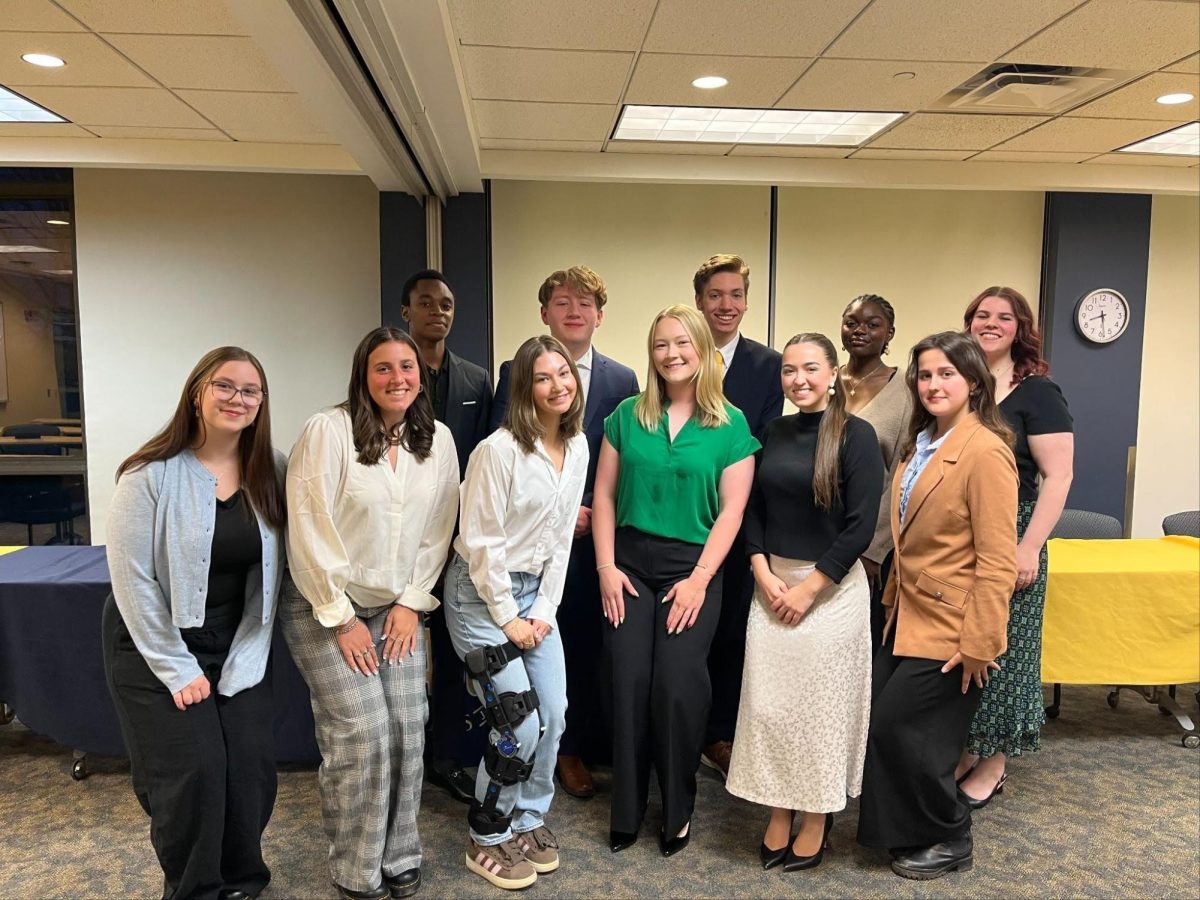
Though Servey is listed as the sole author, eight other students are listed as contributors: Sarah Degnan, ’27, McKenna Gray, ’29, Maxwell Hutchison, ’29, Sofia Richards, Nickel Spartz, ’26, Pressley Stevens, ’29, Ella Turner, and Zoe Williams, ’26.
The document recommends that the college remain entirely AI-free for now, citing what it describes as unresolved risks related to environmental commitments, academic standards and community values.
One of the biggest concerns raised in the document is the environmental impact. Allegheny has been a carbon-neutral campus since 2020, and the document argues that AI technology is often associated with high energy consumption and water usage, which compromises that commitment. It suggests that even limited usage could “threaten” the college’s environmental reputation, particularly among students drawn to its environmental science programs. More broadly, the document frames AI as a technology whose current condition may contradict the environmental goals that the institution has set.
Williams, who contributed to the document, explained that its most central point was the environmental aspect, that the Allegheny campus as a whole has a community of sustainability and carbon neutrality but feels that the administration has made decisions toward A.I with a “not in my backyard mentality to AI.”
Academic integrity and learning outcomes are also central to the document’s argument. It emphasizes Allegheny’s focus on critical thinking, independent research and original student work, particularly through senior comprehensive projects. The document warns that using AI as a tool even just for studying, note-taking or idea generation may lead to reliance on AI, as well as weakening the core values of the college.
These concerns were echoed by first-year student Pressley Stevens, who contributed to the document.
“What we were focusing on for the task force was mainly the impact that AI will have on campus,” Stevens said. “Our main points were the environmental impacts, the social impacts and then also the plagiarizing aspect.”
Stevens added that the task force has examined how AI systems function in practice, particularly their reliance on existing online material.
“AI isn’t capable of creating its own thoughts,” Stevens said. “It will take things from online without properly crediting them.”
This correlates with the concerns about academic integrity, Stevens added, allowing students to bypass engaging with academic material and becoming solely reliant on AI. This lack of citation would violate Allegheny’s honor code.
Beyond academics, the document highlights the social consequences of AI use. It argues that reliance on artificial systems could potentially destroy the relationships created while in college. Face-to-face interactions with professors, advisers and peers are described as irreplaceable, with the document emphasizing that meaningful human connection plays a critical role in student development. It also points to an increasing trend of individuals turning to AI for emotional support, which would negatively impact the user as well as others.
Security concerns further complicate the topic. The document raises questions about data privacy, especially when partnering with a third-party company. It suggests that the risks associated with data privacy are not yet fully understood, so the entire college adopting AI would be risky. Despite these warnings, the document describes how Allegheny has already taken steps toward integrating AI into campus systems.
Servey raised concerns about data security and the reliability of AI-generated information.
“It’s a third-party system being trusted with our data,” he said. “I’m a bit nervous about what is actually being released to the program.”
Servey added that AI systems can be inconsistent and lack logical reasoning when it comes to moral or ethical issues, which may limit their effectiveness in settings other than an academic one.
At the same time, Servey acknowledged some potential benefits, particularly in giving professors flexibility in how they design their courses. He noted that the task force is attempting to remain open to new perspectives, including increased student involvement. Servey suggested that a mix of ideals would essentially be beneficial for a new drafting of future policies.
Ultimately, while the document presents a case for rejecting AI integration at this time, it leaves room for future reconsideration, noting that advancements in AI could eventually address current concerns. For now, it gives the college a call to action to take a stance in preserving its environmental commitments, academic standards and community values.
This article was updated at 12:11 a.m. on Saturday, May 2, to include a statement from the co-chairs of the AI Task Force.

Al Coppolo • May 14, 2026 at 5:40 am
The problem with AI is that the deeper you get into a subject matter the higher the probability that your outcome will experience problems with degrees or freedom, confidence intervals, and colinearity. Allegheny is uniquely qualified to address the impacts of these issues and mechanisms to avoid them. Yet, instead of capturing this differentiating opportunity the college is abstaining from the argument.