The Campus signed an amicus brief on Oct. 15 in support of The Stanford Daily in Stanford Daily Publishing Corporation v. Rubio. The Campus joined 54 additional student media outlets and newsroom leaders nationwide. The lawsuit, filed by the Foundation for Individual Rights and Expression on behalf of The Stanford Daily, challenges two federal immigration law provisions that Secretary of State Marco Rubio is using to revoke legal immigrants’ visas and deport them for speech protected by the First Amendment.
The decision to sign the amicus brief was voted on by members of The Campus Editorial Board, and it was not made lightly. We believe that the principles of diverse representation, dispersal of public information and civic discourse established in the amicus brief are the same defining principles that comprise the heart of independent journalism. We signed in solidarity with other student newspapers doing essential work around the country to record local news as it unfolds, provide a public forum for free speech and train future journalists in professional-level interviewing, editing, investigating and publishing.
The amicus brief — a “friend of the court” legal document filed by an entity with an interest in the case, but who is not a party in the case — was filed by the Student Press Law Center, the Associated Collegiate Press and the College Media Association, three national groups that support free press rights for student journalists. We believe the brief provides a compelling narrative of the extraordinary challenges that student newspapers have faced across the country since the beginning of the year, and that it serves an urgent purpose.
“The Student Press Amici accordingly submit this brief,” the document states, “to emphasize the importance of the work of a student press that reflects a diverse range of viewpoints and voices; to detail the real, persistent, and devastating chilling effect that the government’s attack on disfavored speech has had on student-led newsrooms like The Stanford Daily; and to explain the potential long-term harms that will flow from allowing the government to continue its unlawful, anti-constitutional campaign to stifle speech and speakers it dislikes.”
We signed onto the brief in our capacity as a nonprofit, editorially independent newspaper. Allegheny College is not a member of the Student Press Amici and did not otherwise participate in the Student Press Amici’s brief in support of the plaintiffs.
In its suit, The Stanford Daily alleges that deportation threats have impaired the publication’s ability to engage in journalistic activity. The Stanford Daily editor-in-chief explained that reporters have turned down assignments, requested the removal of articles and terminated their work for the newspaper “because they fear deportation for being associated with speaking on political topics, even in a journalistic capacity.” Additionally, “as a result of the administration’s actions,” The Stanford Daily witnessed a “dramatic” decrease in the number of international students willing to speak to its reporters.
The Campus has seen similar events play out in our own reporting. Since the beginning of the year, we have seen a chilling effect among writers who are hesitant to report on the impact of federal policies. We have received a request for the removal of a story from a student who feared it may adversely harm their visa status. Additionally, we have experienced difficulties in securing interviews on the record from those who fear being targeted due to recent changes in federal policy.
These experiences are hardly uncommon. In fact, situations similar to these across the country prompted the Student Press Law Center in April to issue its first-ever Student Media Alert, warning student newspapers about significant threats to student speech and recommending that student media leaders revisit key portions of their publications’ policies. The move came shortly after the detention of Rumeysa Ozturk, a Tufts University international student, for an op-ed she wrote in The Tufts Daily, which SPLC said led to a “flood” of takedown requests made to student newspapers across the country.
The amicus brief outlines the importance of ending the government’s retaliation against noncitizen students for their speech.
“Current and former student journalists — including those who work at The Stanford Daily and untold numbers of their peers, citizen and noncitizen alike, at student media outlets across the United States — have seen their work and the vital lessons they learn from it hampered for the better part of a year by the unconstitutional chilling effects of the government’s attack on disfavored political speech by noncitizen students,” the brief states.
Student journalists should be able to claim First Amendment freedoms with just as much authority as major national news outlets. Alongside the foundational freedoms of religion, speech, assembly and expression is the freedom of the press. The environment of fear that is created by the assault on this freedom is unacceptable and antithetical to the fundamental values and principles outlined in the First Amendment, which apply equally to citizens and noncitizens.
Signing this brief was not a political move. As The Stanford Daily wrote in its letter from the editors, “Journalism exists to hold those in power accountable, regardless of who is in power.”
The Campus remains committed to the mission we have upheld for 150 years: to serve and inform the college community by printing journalistic work that seeks the truth and reports honestly and accurately, as it distributes high-quality content. In order to fulfill that mission, students, both citizens and noncitizens, must be free to speak with and contribute to their student newspaper. The Campus is committed to ensuring this is the case.
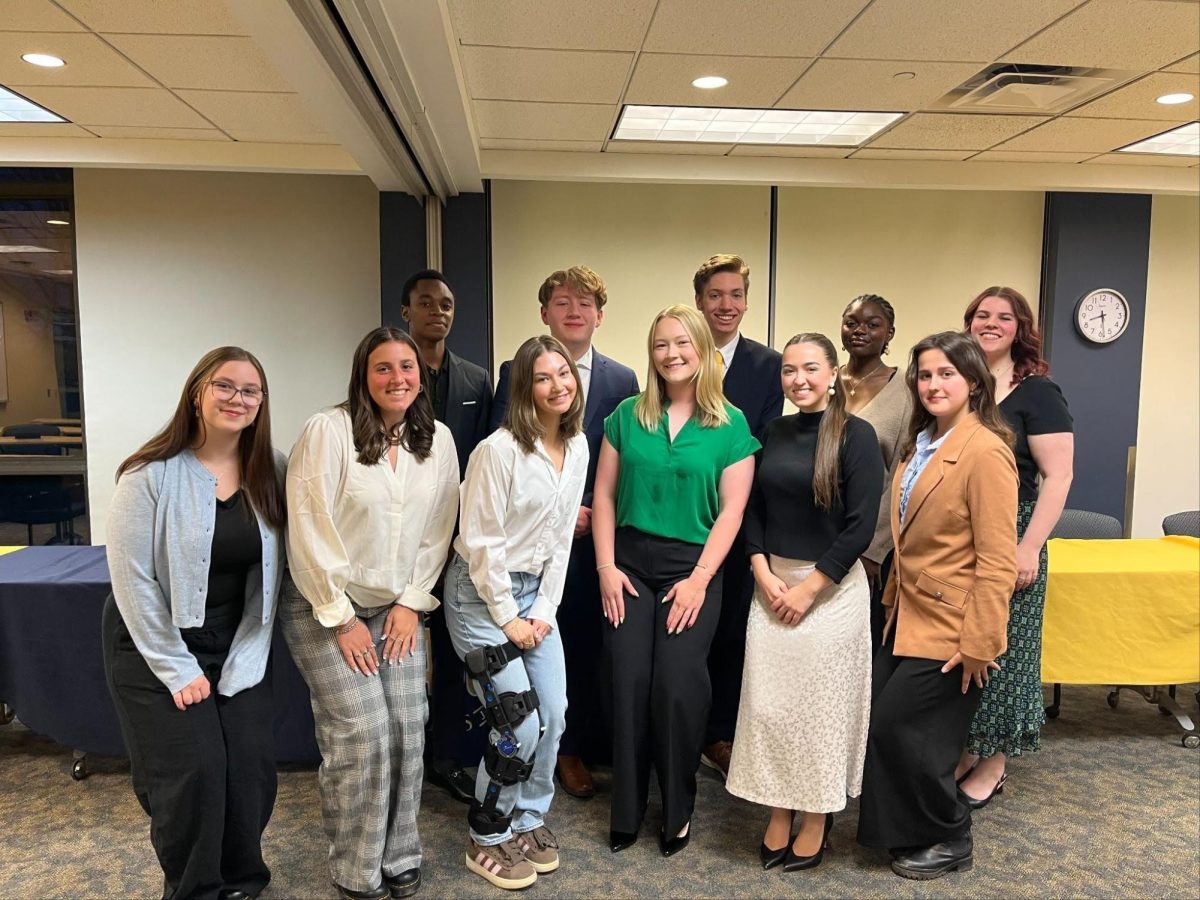
The above editorial represents the majority opinion of The Campus newspaper editorial board. The editorial board consists of Editor-in-Chief Anna Westbrook, News Editor Ben Stavnezer, Features Editor Aubryanna Snyder and Opinion Editor Milo Watson.