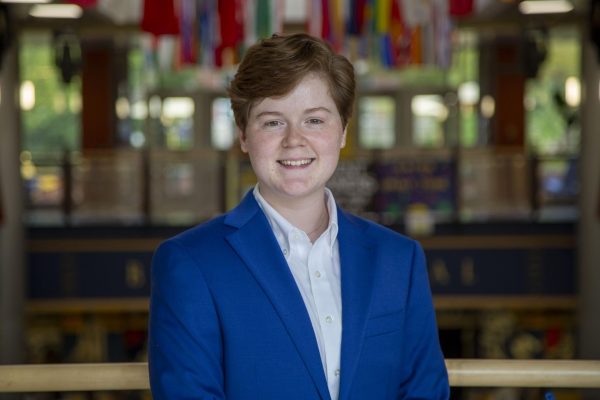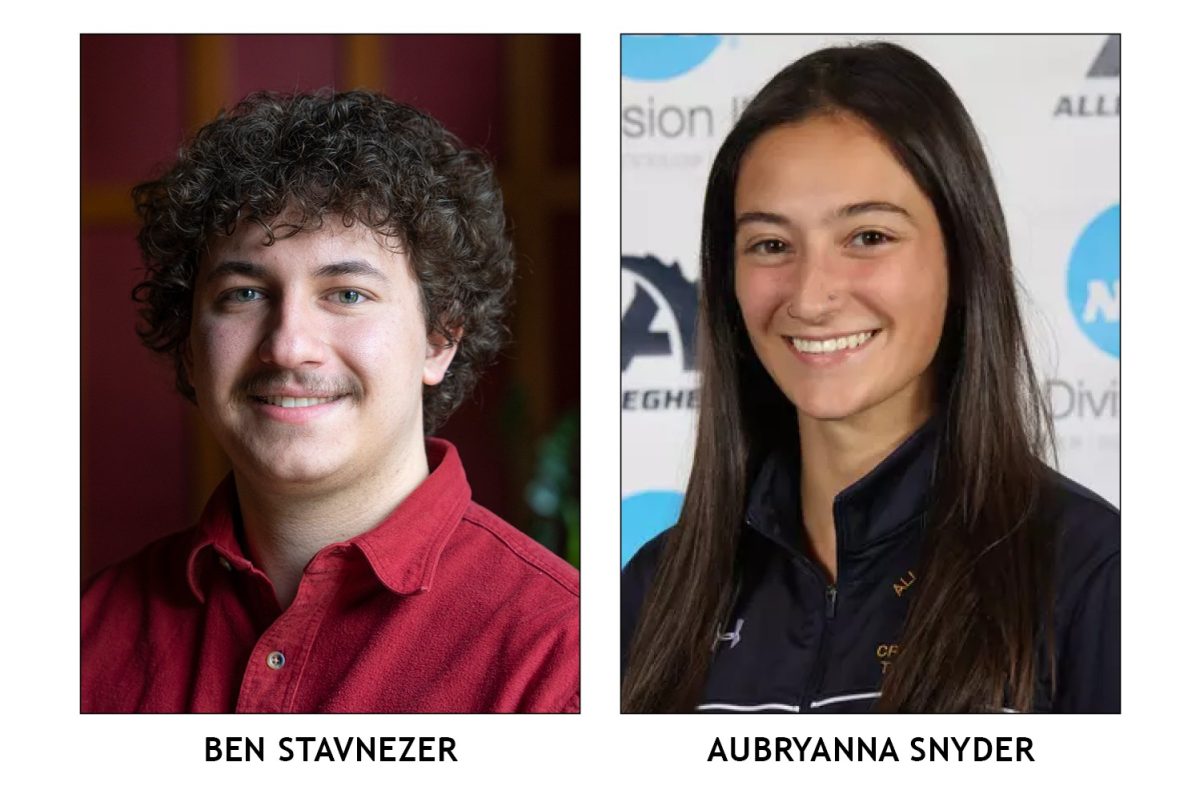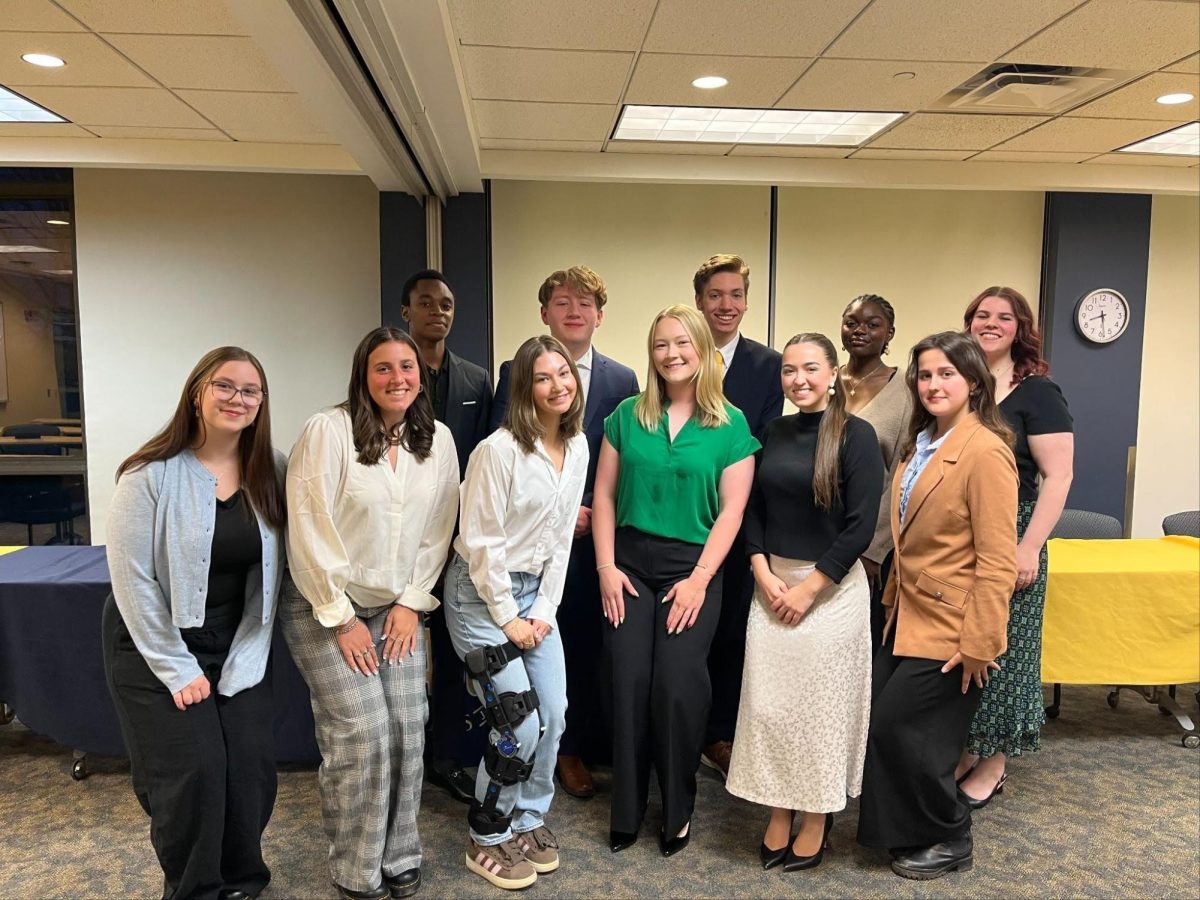
Energetic, smart and funny are the three words First Year Class Dean Aacha Brown-Gregg uses to describe the Class of 2029.
“I really feel like the class is going to be very, very involved,” Brown-Gregg said.
Brown-Gregg has worked closely with the Class of 2029 during Orientation Week, the Weekend of Welcome and the first few weeks of the academic year. The first-years, she said, have largely dived headfirst into their college careers. This is a notable difference from Brown-Gregg’s experience with the Class of 2028, which she said took a little longer to settle in and get involved.
“I think Class of 2028 was really reflective and observing within their first year, and then they saw what they actually wanted to do,” Brown-Gregg said.
Sophia Rader, ’29, and Gabby Palmer, ’29, agree that their class is outgoing, adding that it also feels athletic and individualistic, because everyone is very unique.
The Class of 2029 is made up of 310 first-year students, representing 18 countries and 24 states, plus Washington, D.C. and Puerto Rico. Just over half of the students are from Pennsylvania, with the next most highly represented states being Ohio, New York, Florida and Texas.
Since the COVID-19 pandemic, Allegheny’s overall student body has shrunk by almost 40 percent, from 1,820 in the fall of 2019 to 1,109 in the spring of 2025. This shrinkage is due in part to the nationwide “demographic cliff” — a term coined by economist Nathan Grawe to describe the falling birth rate following the 2008 Great Recession. Fewer babies being born has led to a decrease in the number of students applying to higher education institutions — and a strain on those institutions’ revenue streams. The Class of 2029 was the last standard-sized class nationwide; next year, Vice President for Enrollment Management Jenn Winge, ’96, said the country will begin feeling the “pinch” of fewer applicants.
However, the Midwest and Northeast regions — Allegheny’s primary markets — already began to see the beginning of the demographic cliff three years ago. Despite this, Allegheny’s classes of 2028 and 2029 have seen a 10% increase in student volume compared to the classes of 2027 and 2026, a degree of growth Winge described as “on track.”
“In some ways, we’ve been bucking that trend (the demographic cliff) with our increase,” Winge said. “That’s a good sign of the recognition and our brand identity and strength within our market.”
The college has prepared for years to endure the demographic cliff and is actively taking several steps to combat its worst effects, like visiting a greater number of high schools and engaging in targeted marketing and outreach to prospective students, Winge said.
During the application cycle for the Class of 2029, Allegheny received a record-breaking number of applications, topping 6,000. Additionally, 60 students committed to Allegheny during the early decision process, compared to 29 last year. Winge attributes this significant increase to several strategies the college employed, including early and targeted outreach, guaranteeing a minimum merit scholarship, waiving the parking pass cost for students’ first year on campus and providing the option for first-years to live in singles, an option not typically available to them.
“We also have seen a nice steady increase in the median GPA and the number of graduates coming from the top quarter of their high school class,” Winge said. “I think that’s just also a signal of students being ready for Allegheny, and we’re hoping that that will also equate to them feeling like this is a good fit and a good match and they stay.”
The median GPA for the Class of 2029 is 3.52, with 51% of the first-years coming from the top quarter of their high schools.
During the recruitment process, Winge said many of the college’s international first-years faced challenges due to shifting federal immigration guidelines. Early in the summer, the college anticipated the Class of 2029 would contain 30 international students; by the fall, that number dropped to 16. Winge said the problems were primarily due to long immigration processing times.
“We were frustrated by the barriers with the immigration process,” Winge said. “We would have a larger class if that wasn’t the case. But overall, we’re just really pleased that we do have the diversity and the talent in the class that we have, and we look forward to seeing what they’re going to do.”
Brown-Gregg said that despite the Class of 2029’s general enthusiasm, she has already noticed several students isolating themselves in their rooms, a phenomenon she attributed to the feelings of isolation and social anxiety born from the COVID-19 pandemic. The Class of 2029 was sent home to quarantine while they were in seventh grade.
Rader and Palmer said they see the effects of the pandemic appear in their class’ usage of technology. During the pandemic, Rader said technology usage became “expected” and that now, many students her age feel like their phone is a part of them because quarantine required them to become so dependent on it.
That technology usage has had lasting effects on the class.
“I feel like a lot of people are used to talking to people online,” Palmer said. “Coming to school, it’s a big jump of seeing people from Instagram and actually talking to them.”
“And it makes it harder to talk to people,” Rader said, adding to Palmer’s point. “Technology just isolates people in their own little worlds, and then actually trying to be outgoing, trying to be vulnerable is harder because of the technology.”
“I feel like a big part of us growing up in the times when we should have been out talking to people and doing those things, we were obviously in quarantine,” Palmer concluded. “So I feel like it can be a harder adjustment for some people.”
Brown-Gregg has already witnessed this complex behavior among members of the Class of 2029.
“I feel like those trends are very much still there, but then at the same time they’re very energetic and they want to make friends and things like that,” Brown-Gregg said. “I think that just being in a new environment, having new responsibilities and not having your family around is already a lot for a first-year student, but to have COVID on top of that is even more of a lot.”
In the Common Application, students still have the option to describe how the pandemic influenced their academic career and college applications. Anecdotally, Winge said she has also seen a pattern of isolation and social anxiety pop up in the essays.
Brown-Gregg is encouraging all her first-years to leave their rooms and spend time with others outside the classroom.
“Have fun and really explore what your new home is like,” Brown-Gregg advised, “and then after you’re done exploring, figure out how to make it your permanent home.”