Saving watts today sparks a brighter and greener tomorrow.
Allegheny College recently announced a new partnership with Pittsburgh-based sustainability nonprofit Green Building Alliance, bringing the college into the organization’s Resilient Communities initiative.
“A benefit that I see for us (Allegheny College) is that students can get involved,” said Director of Sustainability Kelly Boulton, ’02. “I am hopeful that it will be overall a positive experience for everyone who is involved.”
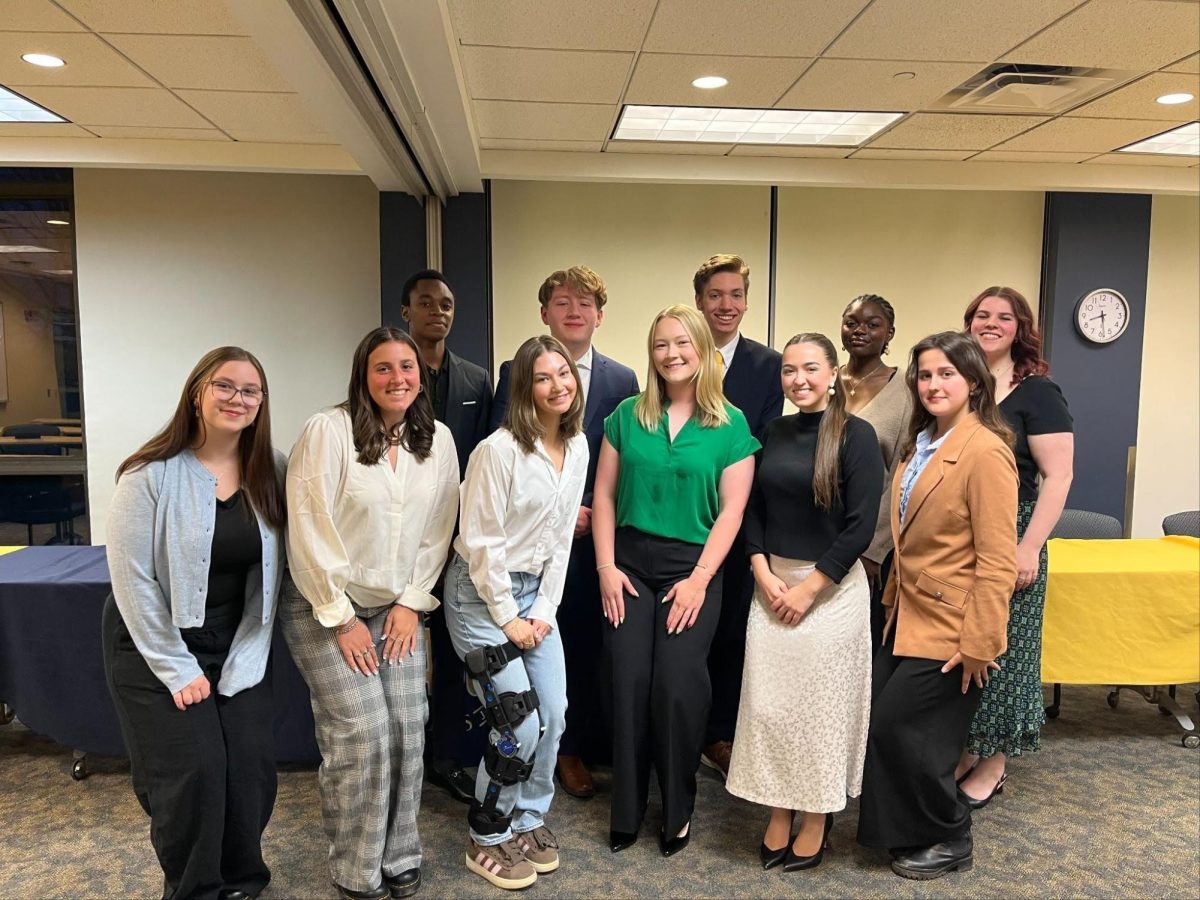
The city of Meadville has been a member of the initiative since 2024, and its progress was celebrated at a reception in Hatch Hollow on Wednesday, Sept. 10. The event allowed students and other members of the community to take a deep dive into what energy efficiency and sustainability looks like in the community. Guest speakers at the event included Brian Hill, a member of the Met-Ed Penelec Sustainable Energy Fund Advisory Committee, as well as Autumn Vogel, ’15, a Meadville City Council member and liason to the city’s Environmental Advisory Council.
Since the beginning of the program in 2024, the Resilient Meadville initiative has grown to include 98 buildings that represent over 2.1 million square feet.
Some services that are offered through the Resilient Meadville initiative are utility bill reviews, funding referrals and grant writing support, coaching and support for integrating resiliency goals with other projects, energy and water savings education and training, as well as green building career readiness for youth and adults.
The organization is supported by the Met-Ed/Penelec Sustainable Energy Fund, allowing GBA to work with Meadville to improve outdated local buildings and develop them for the costs of the future.
GBA now plans to expand its work in Meadville to include Allegheny, to whom it will recommend building practices that reduce energy needs, utility costs and emissions at the college. Their work could lead to the strengthening of the community, making participating buildings more eye-catching to residents and families, according to GBA Director of Outreach and Technical Assistance Lisbet Searle-White
The partnership between Allegheny College, Meadville and GBA was brought up about a year ago in November 2024. The GBA is mostly centered in Pittsburgh and has been helping people and communities make their buildings more efficient, sustainable and reducing their carbon emissions for over 30 years.
“I think it brings immense benefits because the college has a long history of prioritizing energy efficiency and sustainability and has made some significant long-term commitments,” said Searle-White. “So, to bring all of that history and rigor to it, I feel like that is going to really help other people here see the value of it by example and by hopefully connecting the town and a college.”
According to Searle-White, there has been an interest in creating “a resilient community” and the GBA had chosen to do a community that already has an interest in energy efficiency and sustainability. This allowed for the creation of the city’s Environmental Advisory Committee and a climate action plan in Meadville in partnership with GBA.
There are some initiatives that are being worked on, such as a funding program where if a person were to make changes to their home that increased energy efficiency by at least 20 percent, the person would be eligible to receive funding from GBA to sustain those changes. A loan would stay with the building, instead of the person borrowing it, because of the value of the building.
Environmental benefits of sustainability include pollution and waste reduction and conservation of natural resources like water, forests and energy. It also helps protect ecosystems and biodiversity, as well as slowing down climate change by cutting greenhouse gas emissions.
According to a LinkedIn post published in August, Allegheny College is a national leader in sustainable design, operations, energy efficiency and environmental education. Allegheny has been benchmarking the performance of its buildings for more than two decades.
Economic benefits from sustainability include saving money through energy efficiency, waste reduction and creates new jobs in clean energy, green technology and sustainable industries. It also increases long-term stability for businesses by reducing reliance on limited resources and encourages innovation and new technologies.
With regard to social benefits, sustainability improves public health by reducing air and water pollution and promotes fairness by ensuring resources are available for future generations. Other social benefits include the strengthening of communities through shared goals and greener lifestyles as well as the improvement of the quality of life with a cleaner campus and community environment.
“I think considering that I started in November, it seems to be really blossoming in terms of getting going and getting established as people are starting to learn about it,” Searle-White said. “So, I think the future is very bright.”