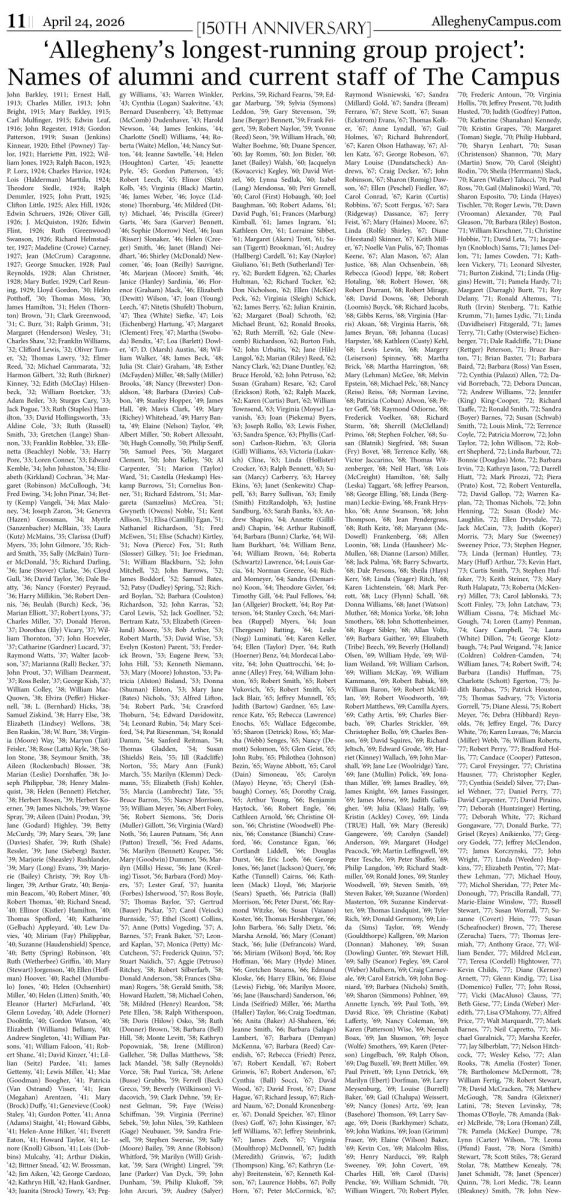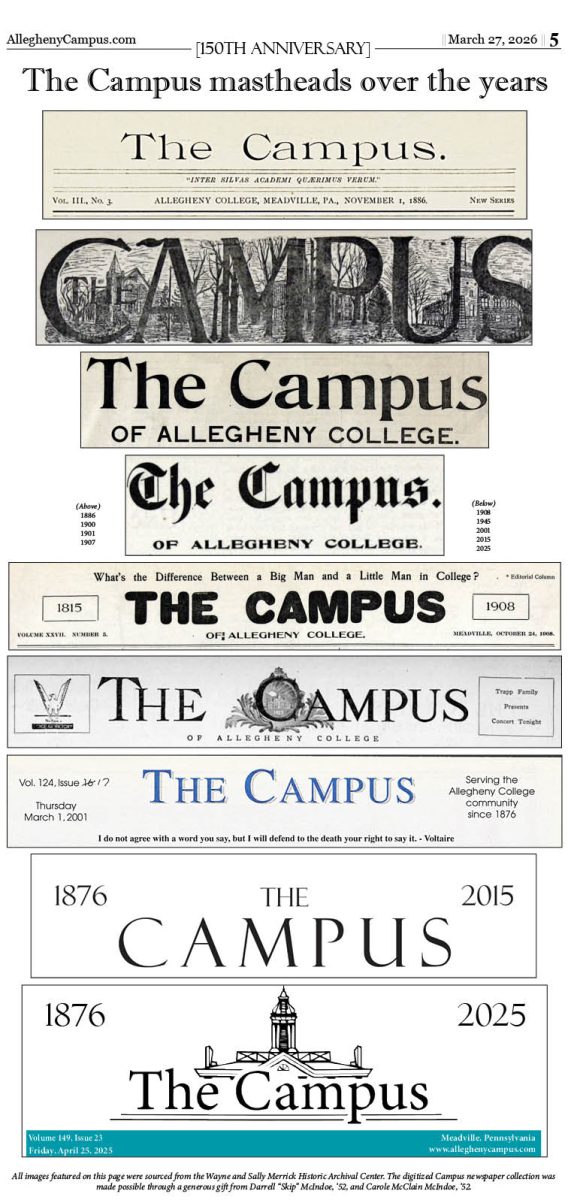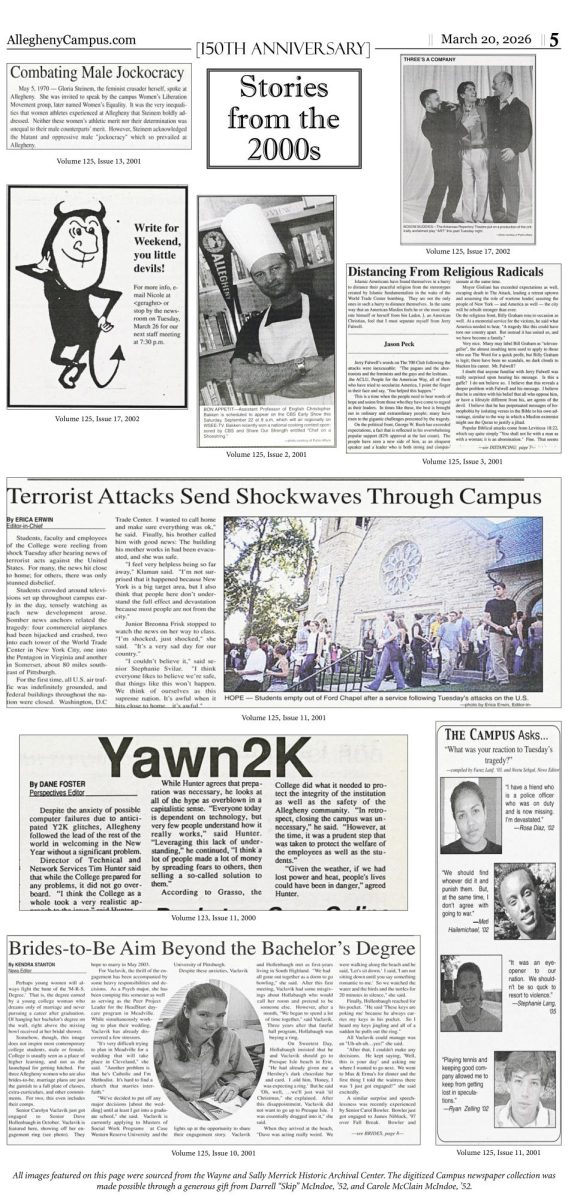

An all-campus reception was held in the Tillotson room of the Tippie Alumni Center celebrating the 150th anniversary of The Campus on Thursday, Feb. 26. A crowd of over 100 people gathered for the event.
The event’s centerpiece was a speech from Anne Gearan, ’85, a former White House correspondent for The Washington Post and long-time reporter for The Associated Press, who gave a 15-minute keynote address entitled “150 Years: The Power of Asking Questions.”
The speech focused on the importance of journalism and how the skills of journalism can positively influence all facets of one’s life.
She described The Campus as a place where students learn to “challenge assumptions and listen harder.”
“Journalism, of course, begins with curiosity,” Gearan said. “It’s the refusal to take things at face value. The Campus has done more than inform the community; it has shaped the people who make up that community.”
The courage to go out and ask questions is not just an important skill for journalists, but also for citizens of all kinds, according to Gearan.
“This is your chance, really, to be part of something bigger than yourself,” Gearan said. “To write that first draft of history at Allegheny. To ask the questions that matter.”
“We should all ask questions,” Gearan continued, “and importantly, we should all listen carefully to the answers.”
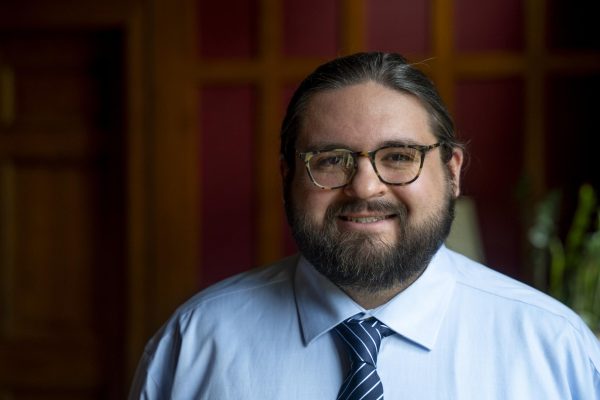
Following the keynote address was a panel discussion consisting of Gearan, current Editor-in-Chief Anna Westbrook, ’26, Chris Potter, ’93, who is a government and accountability editor at NPR’s Pittsburgh station, and Michael Crowley, the faculty advisor for The Campus. While at Allegheny, Gearan was a staff writer and Potter was a columnist for The Campus. The panel was moderated by Professor Emeritus Benjamin Slote.
One of Potter’s most important takeaways from his time on The Campus was how being on staff was like being “part of an ongoing conversation that sort of shapes and is shaped by what’s going on around you.”
Sitting at a table in the audience filled with current Campus staff members, Sami Mirza, ’24, who was editor-in-chief during the 2022-23 and 2023-24 academic years, described his time on The Campus as something he could always return back to and that allowed him to develop as an individual.
“It was really kind of an anchor for me, getting through college, teaching me the kinds of things that I can do,” Mirza said. “Being able to produce and meet the standards of The Campus and kind of push boundaries a little bit really helped me grow as a person.”
He called The Campus “aspirational” and said he’d like to look for a job in the future that operates like The Campus.
“Not everything is at the level of The Campus,” Mirza said. “If I can get back to writing at the level of The Campus, editing at the level of The Campus, the amount of care for the community, the amount of effort that goes into it, in addition, I’d be happy.”
Standing next to a table stacked with hors d’oeuvres such as meatballs, baked brie and spinach artichoke dip, Ethan Woodfill, ’22, who was editor-in-chief during the 2020-21 and 2021-22 academic years, described the tough decisions that come with being a member of The Campus staff and how to navigate them.
“People might be upset with what you have to put out,” Woodfill said. “If you know what you’re doing is right, I think you should do it anyway.”
While introducing Gearan, President Ron Cole, ’87, acknowledged the tension that is sometimes present between the college administration and The Campus.
“I may not always agree with what’s written in The Campus,” Cole said. “I’m deeply proud and glad that we have a college newspaper.”
The panelists acknowledged the hard work and collaborative effort of the current newspaper staff.
“It’s the longest-running group project at Allegheny,” Westbrook said. “This is a student-run endeavor.”
Crowley agreed, praising the students on staff.
“I watched those students in action for the last ten years,” Crowley said. “Not a week goes by that I’m not impressed by the level of maturity and professionalism.”
“If it weren’t them doing this,” Crowley continued, “then nobody would just be doing it.”
Westbrook agreed and spoke about what drives some students to work for The Campus.
“Being a journalist, you’re doing that because you have a sense of duty to your community,” Westbrook said. “There’s a sense of public service that’s motivating all of the work you’re putting in.”
Potter, during the panel, described politics and journalism as currently two of the more unpopular professions in the country. The difficulties of the job of a journalist are “what make it necessary,” he said, despite the fact that it can be uncomfortable in a small community.”
“You have to deal with the fact that you are writing about and covering people that you know, that you may see around, that may be on the next bar stool,” Potter said. “It’s not that big a campus.”
Westbrook said there is overlap in the experience of being both a student and a journalist, but added that The Campus “is its own individual educational experience that you’re not going to get in just a regular classroom setting.”
Westbrook shared their hopes for the future of The Campus.
“We’re still in print after 150 years and we’re going to stay in print,” Westbrook said.