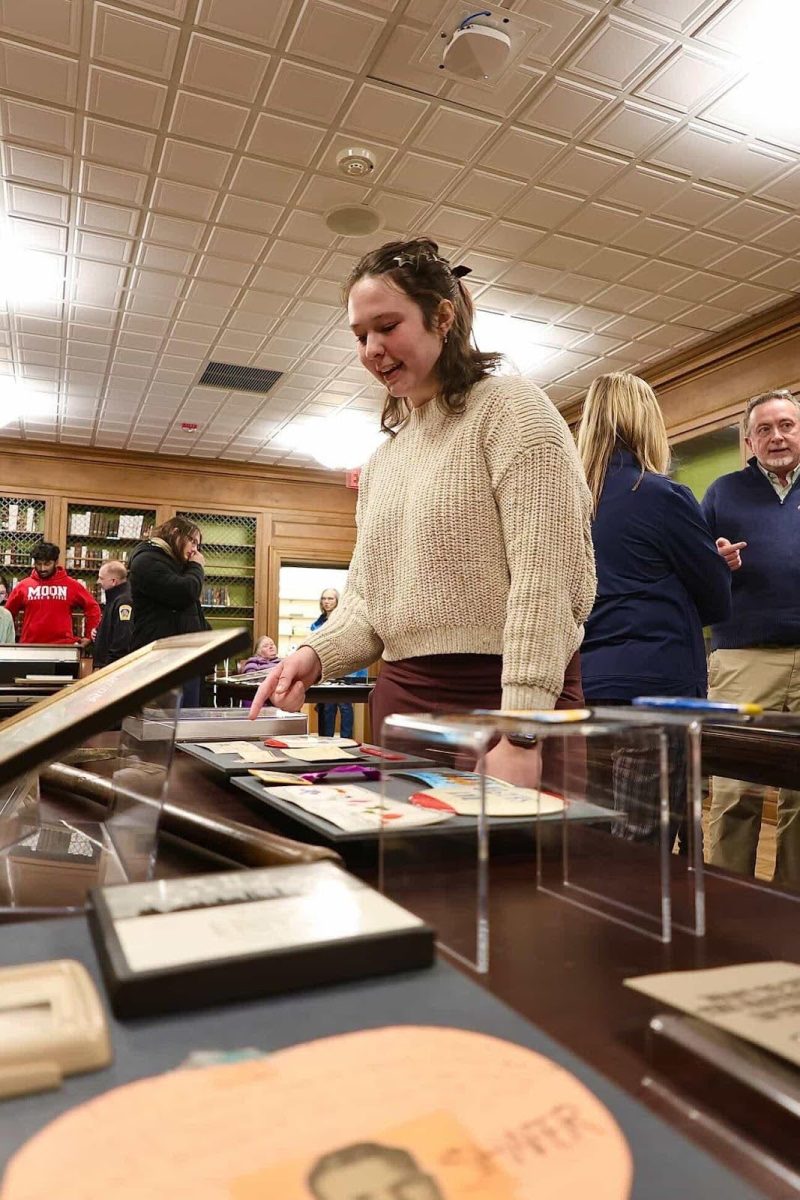
The Raymond P. Shafer collection in the Wayne and Sally Merrick Historic Archival Center was showcased to students, faculty and community members on Thursday, March 19, during an “Out of the Vault” presentation.
The event was led by Merrick Archives intern Anna Oros, ’28, with support from Archives & Special Collections Librarian Chris Anderson.
The Shafer collection is one of Allegheny’s most expansive political archives, containing campaign materials, correspondence, photographs and personal artifacts from the former Pennsylvania governor and Allegheny alumnus.
Oros said the experience of preparing the display furthered her understanding of Shafer’s legacy.
“I originally hadn’t known who Raymond P. Shafer was,” Oros said. “I’ve heard the name before with the Shafer auditorium at Allegheny, but I didn’t know what he did or what his legacy was. So getting to learn that he was an Allegheny alumnus and he was in the Navy and he was governor of Pennsylvania — all of that was very interesting to me.”
Oros added that curating the exhibit required careful decision making.
“At first I saw so many different things and I was like, ‘Oh I kind of want to show all of them,’” Oros said. “But that would be too much and it wouldn’t fit, and it would be hard to focus on certain things, such as choosing what sort of matched what I was talking about and what could help educate people and learn more about what I was saying.”
Visitors moved through the room examining Shafer’s campaign memorabilia, annotated speech drafts and personal items that revealed a more human side of the former governor.
Public Safety Officer Brian Arnink said the presentation helped him understand Shafer’s significance.
“I didn’t know anything about Shafer and learned a lot from where he came from and how he ended up,” Arnink said. “I thought that was pretty interesting.”
Arnink added that preserving such materials is essential because Shafer remains “an important person in our state of Pennsylvania, Allegheny, Meadville and local history,” including by modernizing the Pennsylvania constitution. Archival presentation is important, Arnink said, because it helps people see “how it all started.”
Oros highlighted several of her favorite artifacts, including various tools awarded at ceremonial events.
“I really liked the shovel and the pickaxe and the axe,” she said.
The humorous items in the collection also drew Oros’ appreciation, such as “a pumpkin with his face on it” and a card reading “Shafer the fastest draw in the West” with his face taped onto a cowboy illustration. She said these pieces “make him seem less like a politician and more of a human.”
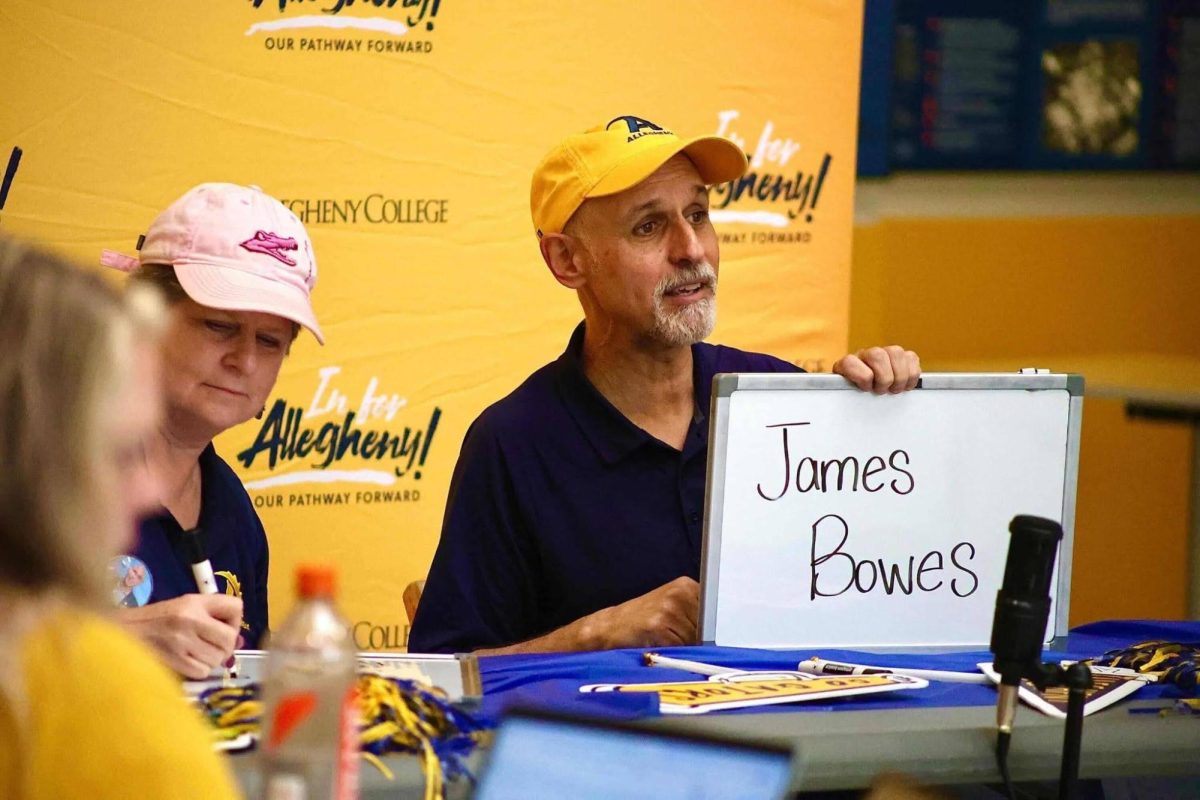
Anderson shared that his favorite materials are those that connect Shafer to national political figures. The Merrick Archive’s Shafer collection includes autographed letters from U.S. presidents going all the way back to John Adams. Anderson said the photographs of Shafer with leaders such as Dwight D. Eisenhower and Robert F. Kennedy are especially meaningful.
“Here is an Allegheny College student who ends up graduating and serves, but then he goes on to become a lawyer, and then he ends up going into politics,” Anderson said.
To him, the items in the Shafer collection are “inspirational” because they show that “you can leave Allegheny and end up becoming a national figure, in politics or government.”
Anderson described the Archives’ mission as “collecting, preserving and promoting.” Archivists, he said, are “caretakers of that history,” ensuring that materials are readily available for future scholarship. Anderson added that the materials in the Merrick Archives can support research for biographies or student papers.
The Merrick Archives has several more events planned this semester. Archives intern Pressley Stevens, ’29, will give a presentation on the history of theater at Allegheny in April.
Anderson added that the Archives will soon launch the ArchiveSpace search tool, which will allow users to look up materials by keyword and reserve a table to view them. The system, Anderson said, will be the first to let “students and faculty and outside researchers find out what we have without having to call us.”