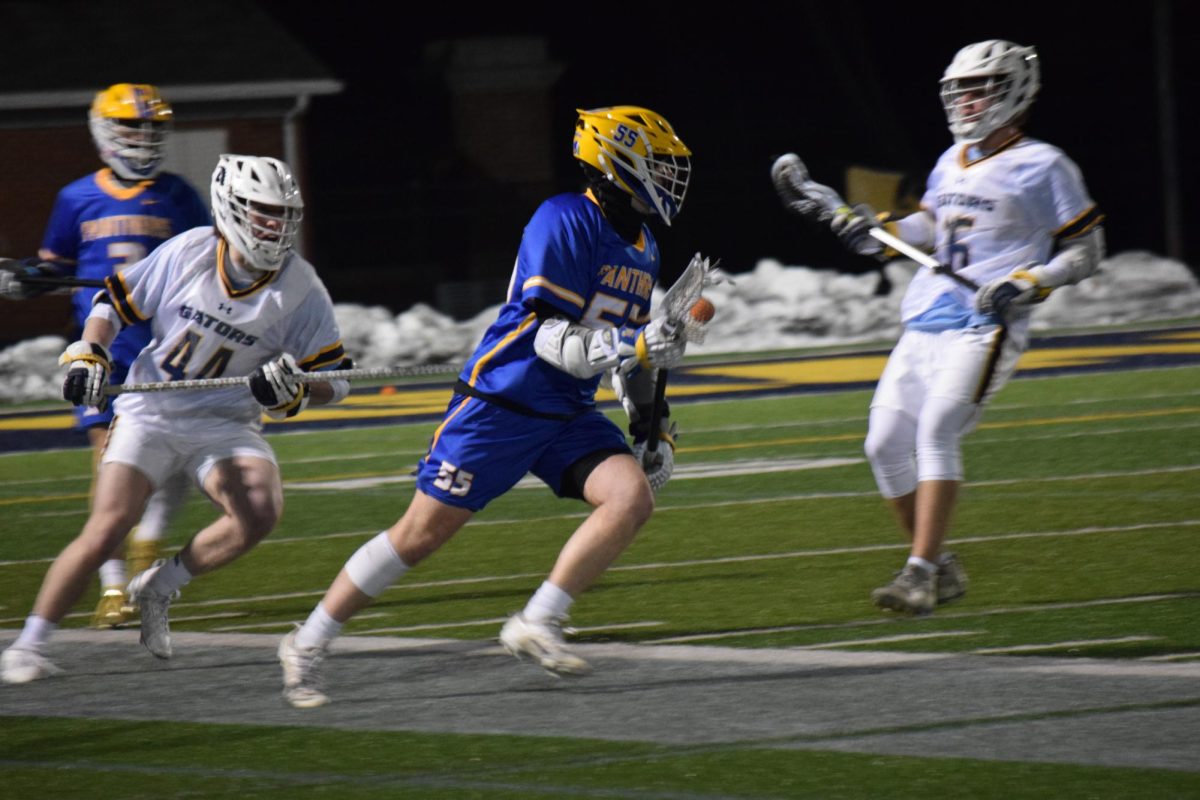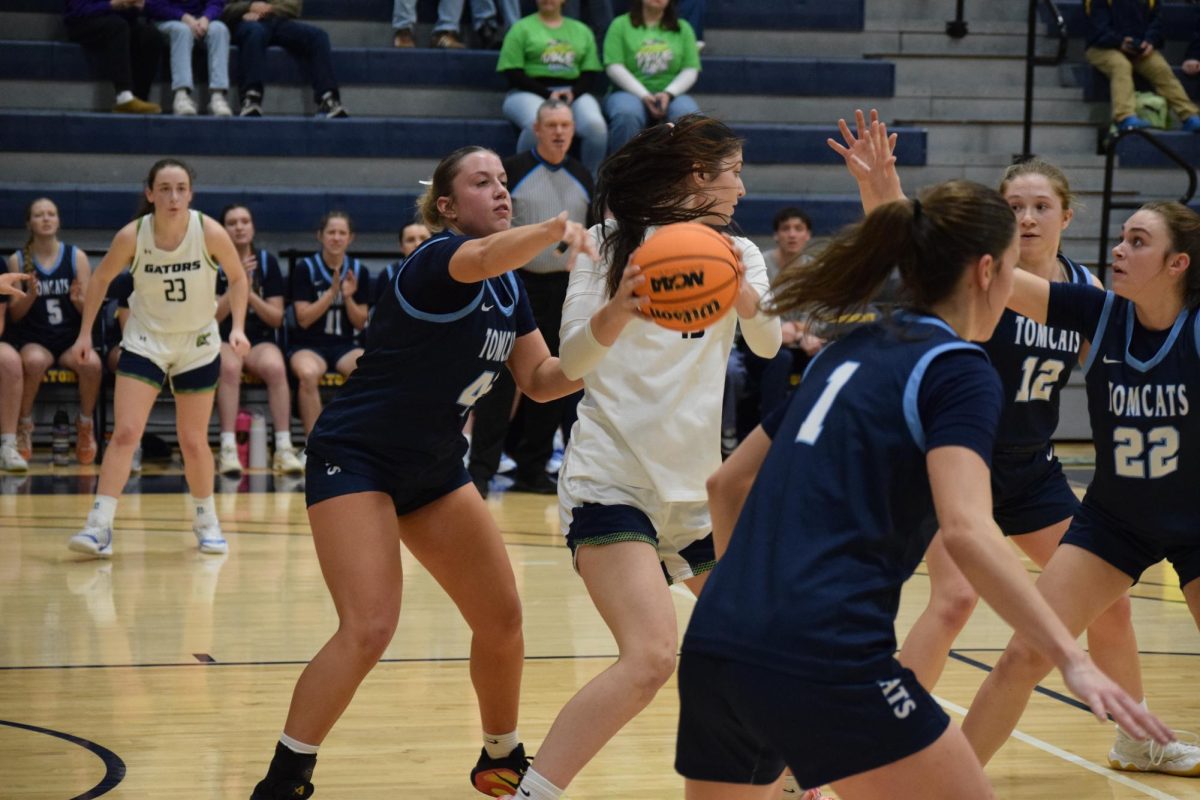
When a collegiate sports game is happening, whether on TV or at Allegheny, people rarely pay attention to anything other than the players, coaches and the score. But there are so many tasks and people that are essential for a game to happen — the behind the scenes are the essence of the game.
Assistant Athletic Trainer Tyler Shipley explained what it is like to work with athletes at the college level and what his job as a trainer looks like on a daily basis.
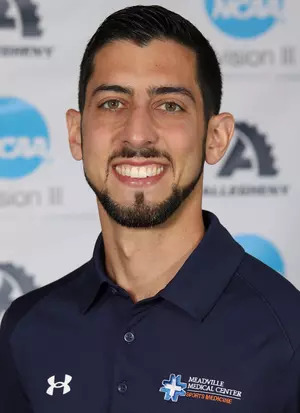
“Day to day I would say it could be 20 to 30 (student-athletes) that are coming just to get treatment,” Shipley said. “That doesn’t mean other people aren’t coming in throughout the day to get taped, to get ice, heat on their own, but to come in and get hands on treatment, I would say somewhere in the 20 to 30 range.”
During the fall season that number is even bigger, in the range of 40 athletes a day, mostly because it is the football season, a sport that has a larger roster.
The work the trainers have to do sometimes gets even more intense during a game day at home. They are in charge of setting up the water for the side lines, ice, towels, medications that the athletes might need and rehabilitation equipment.
The work also gets more intense when the visiting team doesn’t bring a trainer, which is normal when the sports are not high-contact, according to Shipley.
“At home, obviously, you have the AT room open ahead of time, so you’re taping the home team, sometimes taping the away team,” Shipley said. “You’ve got kids coming in for treatment, to do heating, stretching and receiving any sort of modality treatment prior to warm-ups.”
In contrast, the trainers only prepare a portable medical kit and sometimes crutches for the team to take to away games.
Shipley said that the training room is currently fully staffed; the trainers each have a primary team to work with, which makes it easier for them to travel with the high-contact sports, especially football and men’s lacrosse.
Building trust with the athletes is essential, partly because it can influence their recovery from injuries, he added.
“In this atmosphere you want to build trust with somebody because if someone doesn’t trust you, then they’re going to be guarded and I think neurologically that’s going to have an effect on recovery,” Shipley said. “I mean, just someone trusting you makes them feel comfortable, less tense and probably less stressed.”
The relationships the athletes and trainers build is one of Shipley’s favorite parts of the job.
“You get to know somebody from their freshman year all the way through their senior year,” Shipley said. “Seeing them succeed is really cool. Also getting to know them and what their interests are outside of sport, what they end up doing after college is really exciting to see as well. That’s definitely the best part.”
Academics also come into play as a student-athlete. Even though athletes try to balance practices and games with their classes, sometimes the time management is difficult.

That is one of the reasons Allegheny has Student Athlete Academic Support Coordinator Chris Calliari, who serves as the bridge between the student and the athlete, helping these students to succeed in both academics and sports.
“The best way you can describe my job is I’m the class dean of student athletes,” Calliari said. “I’m not officially a class dean, but I interact with student athletes just like a class dean would.”
Calliari helps student-athletes who are scheduling classes for upcoming semesters, holds intentional study halls and advises the students with time management.
“I’m helping them create the skills to excel after college, like helping them find internships,” Calliari said. “Academic support is in my title, but I help athletes however I can.”
Calliari also helps athletes make sure they can stay in the games.
“The NCAA requires that student athletes have to be on good academic standing and what good academic standing at Allegheny is at least a 2.0 GPA, cumulative,” Calliari said. “There’s some gray areas, especially when you’re a first-year student, (but) if you have back-to-back semesters below a cumulative 2.0, then you cannot participate in your sport. So basically, just don’t ever fall below a 2.0.”
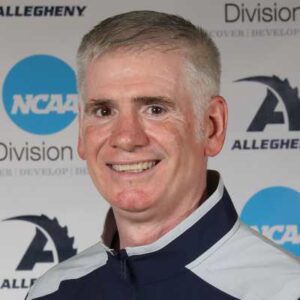
On the other side of the coin, there is Director of Athletic Equipment and Facilities Angelo Panzetta.
Panzetta takes care of all the athletic gear, washing and putting it back and getting it ready for upcoming games.
“When it’s a home contest, no matter if it’s in the Wise Center or up in Robertson, usually the coaches let me know when players are picking up uniforms so I can open up my area to get them,” Panzetta said. “Some of the teams handle that on their own and coaches have access to my area to do that and then the players will come in, grab their full uniform kit, that’s sweats, pre-game, whatever they need for the day. Then post-game, they’re just wheeling the dirty bin back to me and then I’m taking care of it the next day. The next day I hang it back up and then we’re ready for the next contest.”
Panzetta was previously the men’s soccer head coach for 21 years. During that time, he assisted the college’s prior equipment manager, who made the transition from being a coach to being the director of equipment easier.
He doesn’t work alone though; Panzetta said he is assisted by Physical Plant whenever he needs it.
“I have a team of Physical Plant for Allegheny College to lean on, to help resolve whatever issue, whatever problem we’re having,” Panzetta said. “They’re constantly working on the fields and getting them ready for practices and games, whether that’s equipment, lining the fields, all that type of stuff.”
Panzetta also has help from student workers, who help collect balls and mop the floor for sports like volleyball and basketball; in the case of baseball, softball and lacrosse, these students chase balls that are hit out of field.
For Panzetta, the toughest part of his job is to stay organized, especially when it comes to last minute changes in the schedule, which usually happen because of the weather.
“Our climate here in western Pennsylvania — it’s a tough schedule for baseball and softball, because of how much rain we’re going to get in the spring and their games will move to certain days,” Panzetta said. “Or if the game gets canceled, the bus changes and all of that. So I just have to make sure I’m keeping everything straight through, so I can have everything available.”
Besides the extremely busy work, Panzetta likes his job at Allegheny, especially after so many years as a Gator.
“I loved to be the men’s soccer coach, but then sliding into this role I still get to interact with the athletes and that was one thing that was important for me,” Panzetta said. “I enjoyed that part of my job. I enjoyed it as the coach and now I enjoy it in my new role. But the most enjoyable thing I have it’s a great staff that I work with. The head coaches and the rest of the athletic staff are all great. I enjoy coming to work every day and working with good people.”