
When Dylan Chan walks into the weight room at the David V. Wise Center, the energy shifts. Music plays, racks are filled and athletes across sports push through workouts designed to make them faster, stronger and healthier. But for Chan, the new head strength and conditioning coach, it’s not just about the numbers on the barbell– it’s about building a culture of growth, resilience and joy in movement.
Chan, hired this summer, has a full résumé despite being only 23 years old. His journey began at La Roche University, where, as an undergraduate student-athlete, he got the unusual opportunity to design training programs for the men’s soccer team. He also founded the university’s powerlifting club, managing training for more than 50 students. That early start gave him a foundation that would shape his career.
“As an undergrad, you don’t often get that kind of hands-on experience,” Chan said. “I was learning how to program, how to motivate and really just how to swim on my own.”
After La Roche, Chan pursued his master’s degree at the University of New Haven, where he worked as a graduate assistant under veteran coach David Faugno. There, he trained football players, baseball infielders, women’s tennis, cross country and more. Several of those teams won conference championships.
One of Chan’s proudest moments came from working with New Haven’s women’s tennis team. At first, many of the players resisted the weight room. But by the end of the season, not only had they embraced strength training, they also won a conference title.
“They hated lifting at the beginning,” Chan recalled with a smile. “By the end, they loved it. And we won a championship together. That was really rewarding.”
Coaching Philosophy: Flexibility, Not Rigidity
Chan describes his coaching style as “laid back.” He believes athletes should have the freedom to explore how their bodies move within the framework of safe and effective training.
“Everyone has anatomical differences,” Chan explained. “Not everyone’s squat or hinge is going to look the same. I give athletes the flexibility to find their own way to move. Of course, if something’s wrong, I’ll step in, but I want them to feel ownership.”
That balance between structure and freedom extends to programming. Across all teams, Chan emphasizes the fundamentals: squat, hinge, push, pull and single-leg patterns. From there, training becomes sport-specific. Baseball and softball players do more rotational work and medicine ball throws, while soccer athletes focus on knee and ankle strength to prevent injuries.
“Strength is really a service industry,” Chan said. “We look at what the athletes are lacking, and we provide it — whether that’s strength, speed, structure or even confidence.”
Chan sees his role not only in boosting athletic performance but also in protecting athletes’ long-term health. Injury prevention is embedded into every workout. While athletes recover between sets, instead of waiting, they perform mobility exercises or stability drills.
“There’s no way to count how many injuries you’ve prevented,” Chan admitted. “But we build those exercises into everything we do so athletes can stay strong and healthy.”
That mindset extends beyond athletes. Chan says one of his passions is helping people — whether collegiate players or ordinary fitness enthusiasts — find ways to live healthier lives.
“It’s not just about on-field performance,” he said. “It’s about someone being able to walk up the stairs without being out of breath or enjoying movement again.”
Adjusting to Allegheny: A Strong Start
Transitioning to Allegheny has been smooth, Chan said, largely because of the motivation he sees in Division III athletes.
“As a former D3 athlete myself, I get it,” Chan said. “You’re not here for scholarships — you’re here because you love your sport and you love competing. That makes my job easy, because the athletes truly want to get better.”
The only challenge? Space. The Wise Center weight room boasts 12 racks — impressive for a D3 program — but limited square footage makes it tricky to run multiple teams at once. Even so, Chan says the facilities at Allegheny are “light years” ahead of most programs at the Division III and even Division II level.
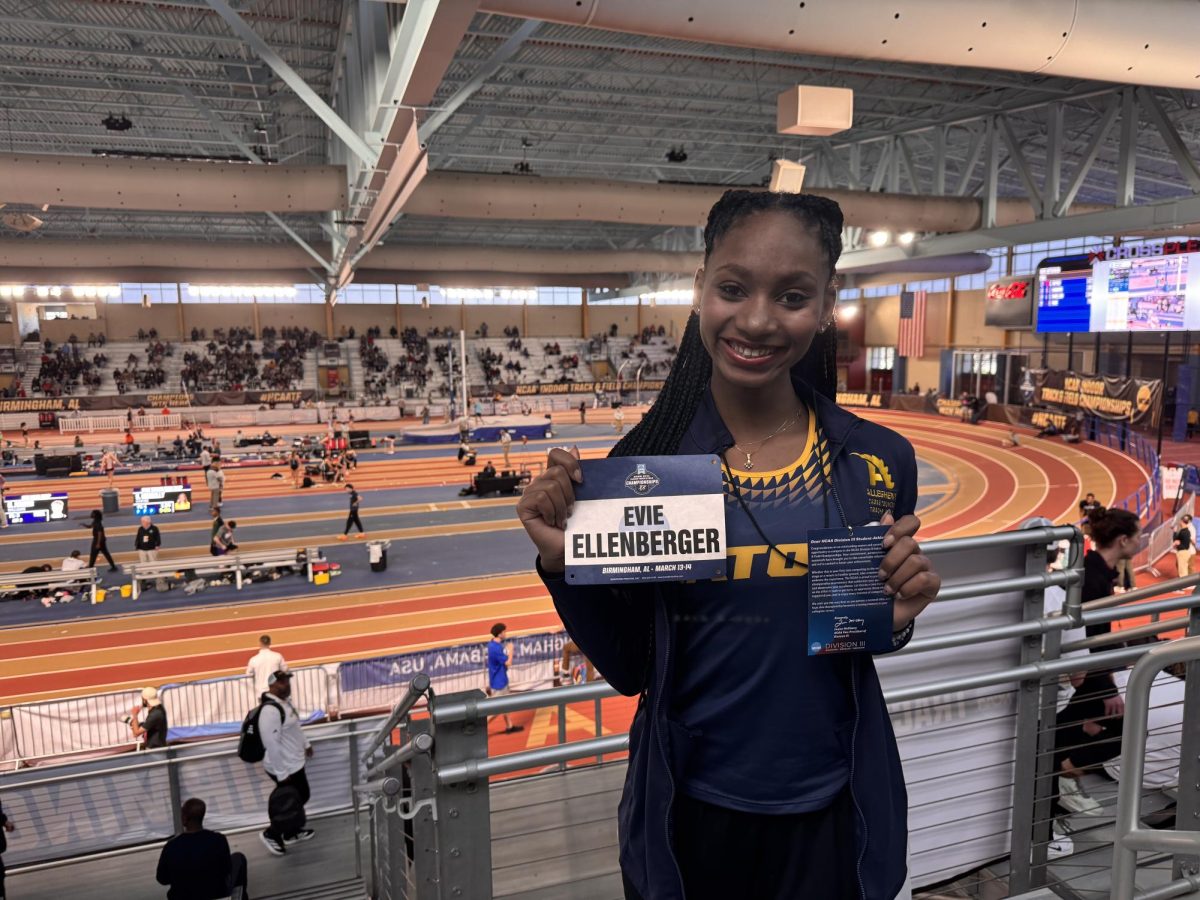
When Chan first arrived, many athletes weren’t sure what to expect. Some, like women’s tennis player Evie Ellenberger, ’28, were struck by his energy right away.
“When I first met Coach Dylan, it was during tennis testing,” Ellenberger said. “I had already seen on Instagram that we got a new coach, and I thought he looked really strong and knew what he was doing. But when I actually met him, he seemed really passionate about what he was doing. The energy in the weight room was really high, and since I love lifting, that definitely made me excited.”
She also noticed his hands-on approach compared to past coaches.
“Last year for tennis season, I had both Cory and Jared, but their style was more like showing us at the beginning and letting us do it on our own,” she said. “But Coach Dylan is really involved — he’s walking around the weight room, making sure everyone’s spotting right and doing the right depth for squatting. He’s making sure we benefit from every rep.”
Vision for the Future
Chan’s goals for his first year are both ambitious and practical. He wants athletes to feel stronger and healthier, but also to leave with good memories of their time in the weight room.
“When athletes graduate, I want them to look back and say, ‘Do you remember that one time in the weight room?’ and smile,” Chan said. “That culture of positivity and connection — that’s what matters most to me.”
A new nutrition initiative is also underway. Thanks to the Golden Gator Club, a donor-funded program, athletes now receive shaker bottles, protein and healthy snacks to support pre- and post-workout recovery. A full-time dietitian, Melinda Lesticlong, has joined the college staff to further support athlete nutrition.
“Nutrition is often overlooked at the Division III level,” Chan said. “Being able to give athletes those resources is huge.”
Looking ahead, student-athletes believe Chan’s influence will go beyond the weight room.
“I think that he’ll definitely bring a more connected team and stronger teams because lifting isn’t just about getting stronger faster — it’s about pushing yourself and mentally getting stronger,” said men’s tennis player Justin Hardie, ’28. “That’s a big part of tennis at least… I think that lifting with him is going to increase our mental and physical stamina, so I think that he can continue to build our tennis team.”
Hardie also emphasized that the team’s potential is only growing under Chan’s guidance.
“Our team has got a lot better this past year — we jumped up to become nationally ranked, which was a big jump for our school and for the tennis team,” he said. “This year I think that our team has the potential to be even better… I think we have a high ceiling, a very high ceiling.”
Life Beyond the Weight Room
When Chan isn’t coaching, he can often be found outdoors. A former baseball player, he still enjoys throwing and hitting. He runs in places like Presque Isle and Pittsburgh, rides his motorcycle to explore nearby state parks and is, as he puts it, is a “big foodie” who loves trying new restaurants.
That balance, he says, helps him bring energy into the weight room every day.
“I love what I do,” Chan said. “At the end of the day, it’s about making an impact — on the field, in the classroom and in life after college.”
A Lasting Impact
In just a few months, Chan has already become a fixture of Allegheny athletics. His athletes know he’s not just watching their lifts: he’s showing up to their games, cheering them on and investing in their success.
“I don’t want to be just the ‘weight room guy,’” Chan said. “I want athletes to know I care about them as people. That’s how you build real strength.”